painting
Sponge Painting Shapes
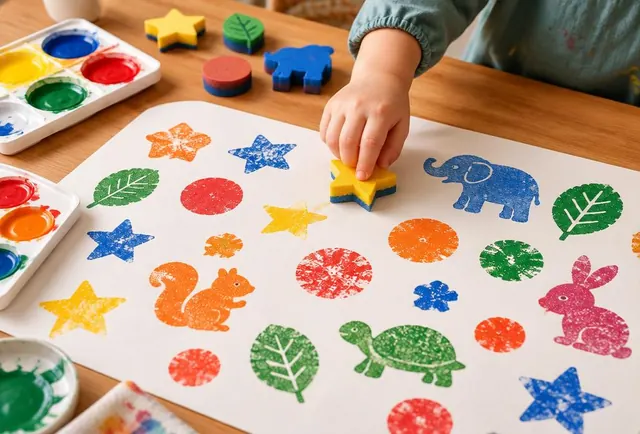
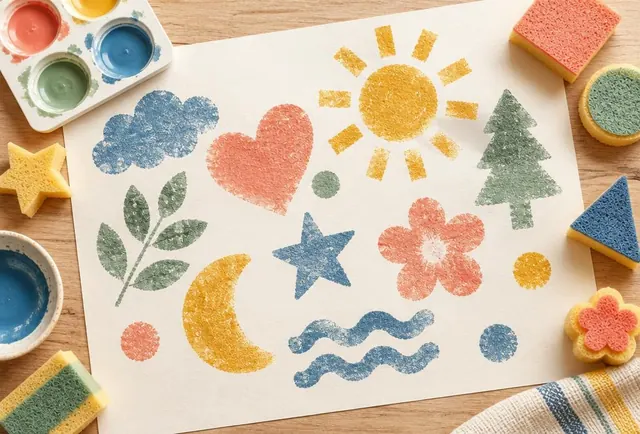
Make circle, square and triangle prints with kitchen sponges, washable paint and paper. Allow 5 minutes to set up and about 20 minutes for painting, plus drying time.
24 activities
Painting is where most parents worry about mess and most children get the most out of an activity. The trick is matching the technique to the age: hands at two, sponges at three, brushes at four and up.
We also take a firm line on materials. One pot of genuinely washable paint prevents more grief than any amount of covering up.
How to paint with a toddler without losing your mind: taste-safe recipes, mess containment, realistic expectations and activities that suit a two-year-old.
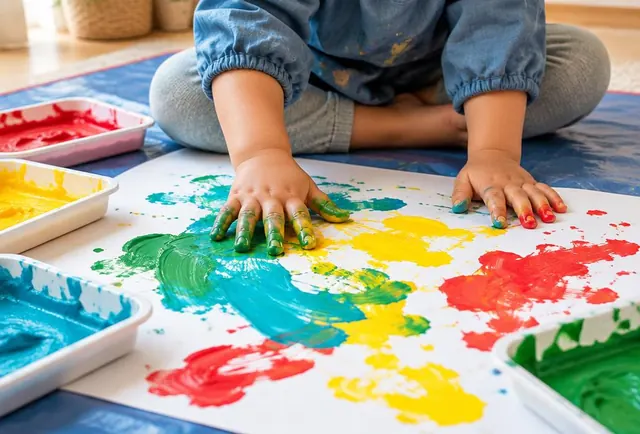
Finger painting activities and homemade taste-safe paint recipes for toddlers and preschoolers, plus how to help a child who hates messy textures.
Sponge painting techniques, shapes and projects for ages 2 to 6.
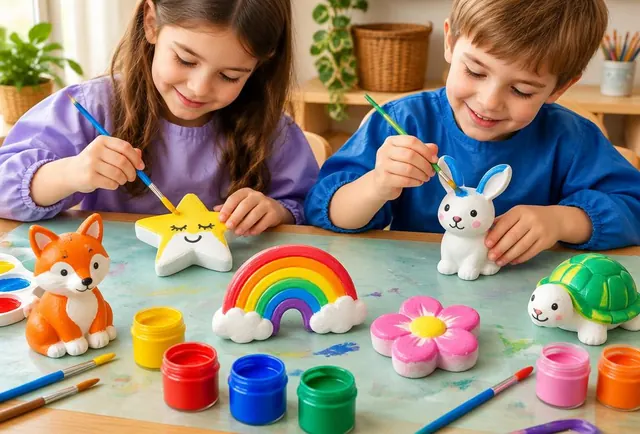
Everything about painting plaster figures with children: which paints stick, how long to cure, sealing the finish and the best plaster kits for ages 3 to 8.
Number of activities suitable for each age. Many activities suit several ages, so these overlap.
painting
Make circle, square and triangle prints with kitchen sponges, washable paint and paper. Allow 5 minutes to set up and about 20 minutes for painting, plus drying time.
painting
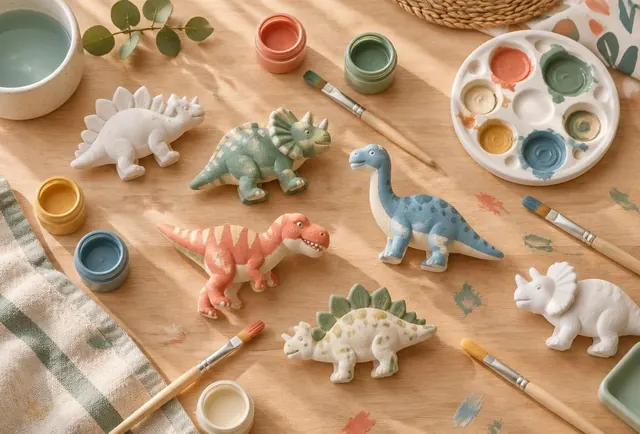
An adult casts plaster dinosaurs in moulds, they set overnight, then children paint their own dinosaurs — or skip casting with ready-made plaster pieces.
painting
Yogurt-and-colour paint gives toddlers a simple first finger-painting experience.
painting
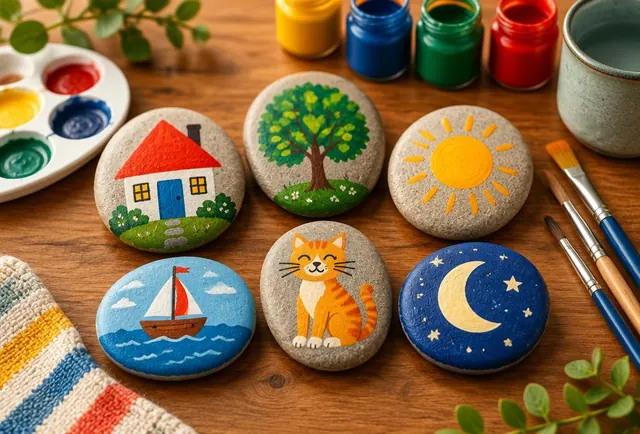
Paint simple pictures on smooth pebbles, then draw a few from a bag to inspire a new storytelling game.
painting
Cast (or ready-made) plaster stars, animals and shells take paint beautifully and finish as display-worthy keepsakes.
painting
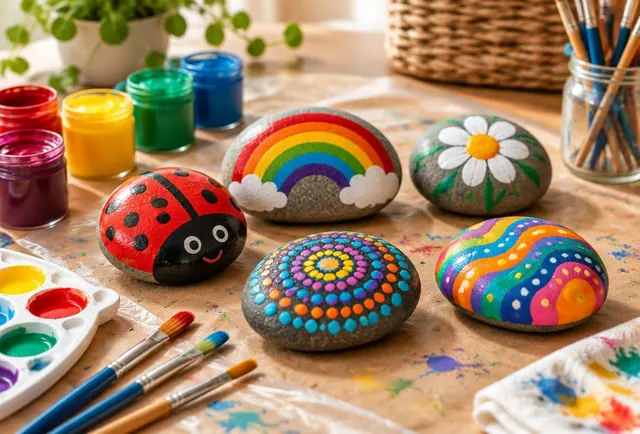
A handful of garden stones and some acrylic paint turn a walk outdoors into a lasting painted collection.
painting
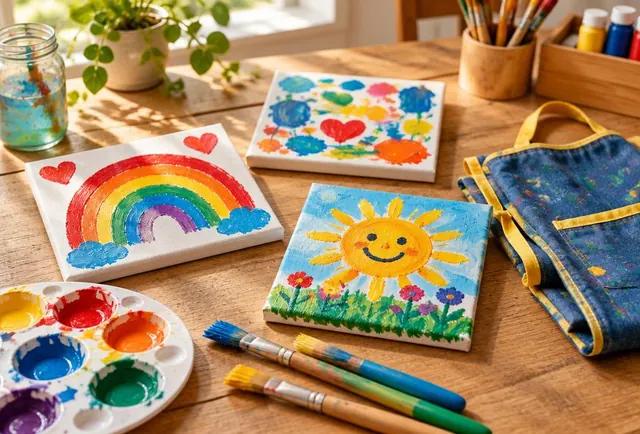
Easy canvas painting ideas for kids aged 3 to 8 — a blank canvas, a few colours and simple approaches that make a picture sturdy enough to hang up.
painting
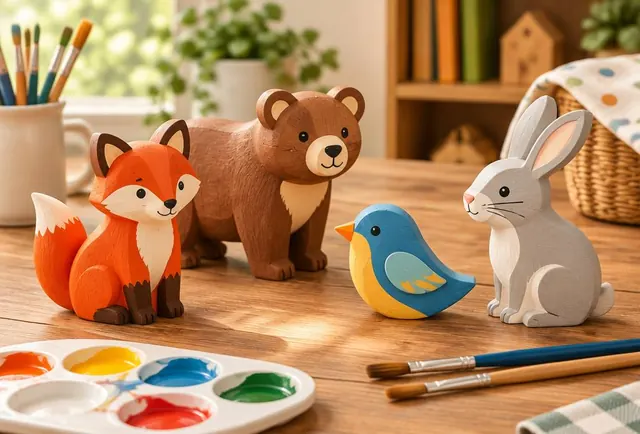
Plain wooden animal shapes, a few colours and a base coat turn into a shelf of characters your child designed — an easy, low-mess wooden painting craft.
painting
Household objects and carved foam stamps turn repeated printing into a fast, satisfying pattern-making session.
painting
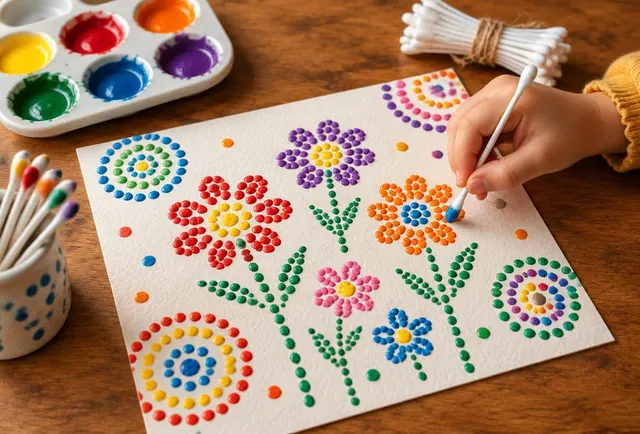
A pot of cotton buds turns into dotted flowers and patterns with almost no setup or mess.
painting
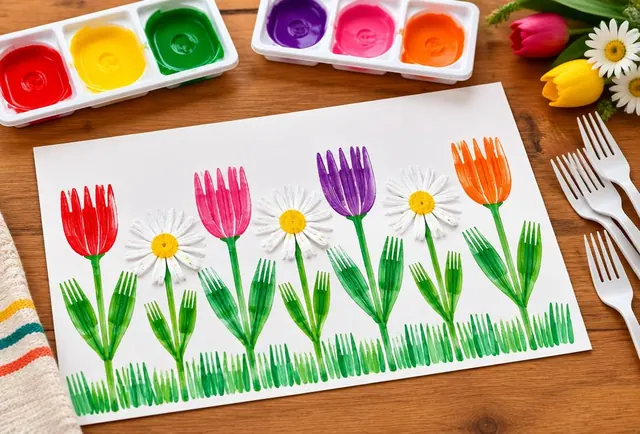
An ordinary dinner fork dipped in paint stamps out a perfect flower shape in one press.
painting
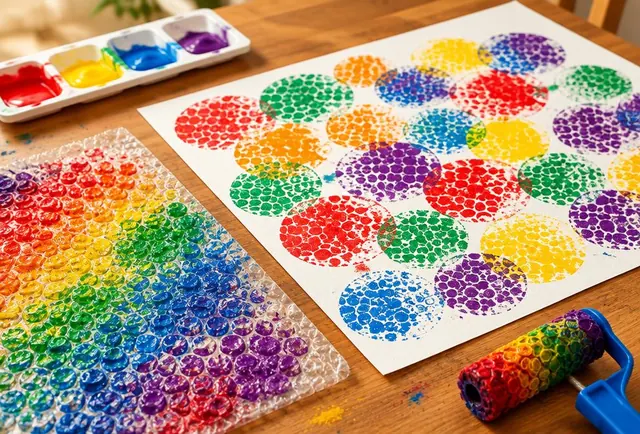
Leftover bubble wrap painted and pressed onto paper leaves a honeycomb texture children love repeating.
painting
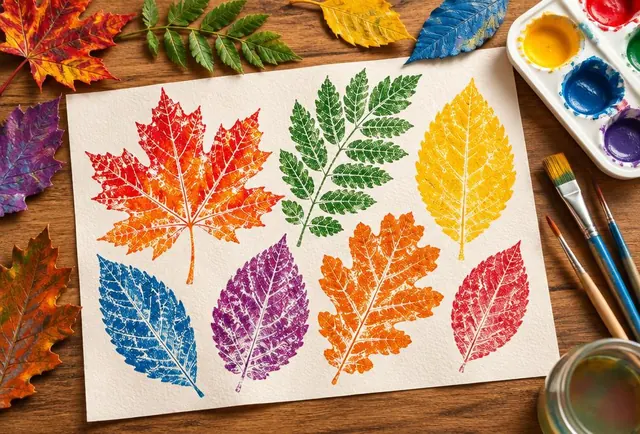
Real leaves gathered on a walk become paintbrushes and printing stamps for autumnal artwork.
painting
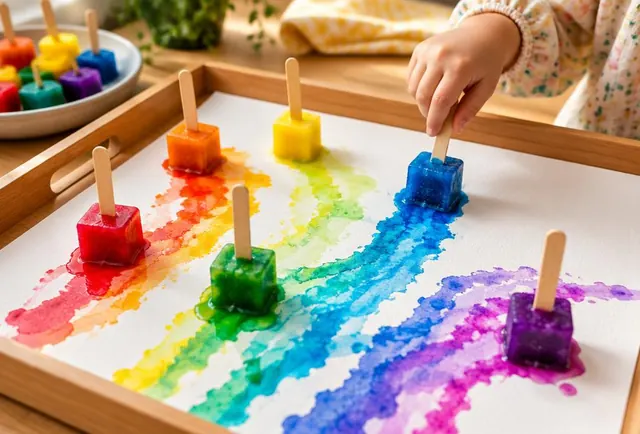
Frozen paint pops on sticks melt into cool, streaky colour as children drag them across paper.
painting
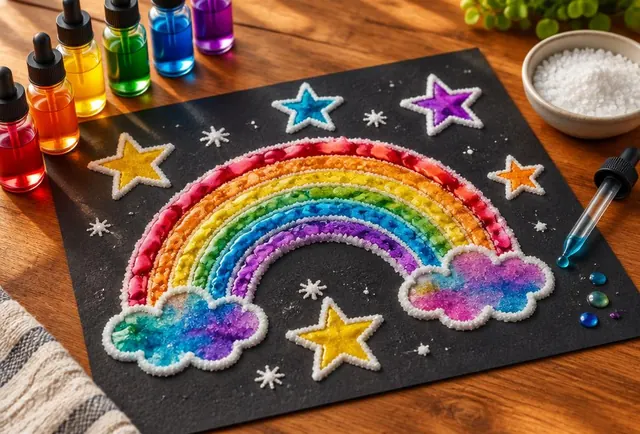
Glue-and-salt lines turn watercolour into a raised, crystalline effect that spreads on contact.
recycled-crafts
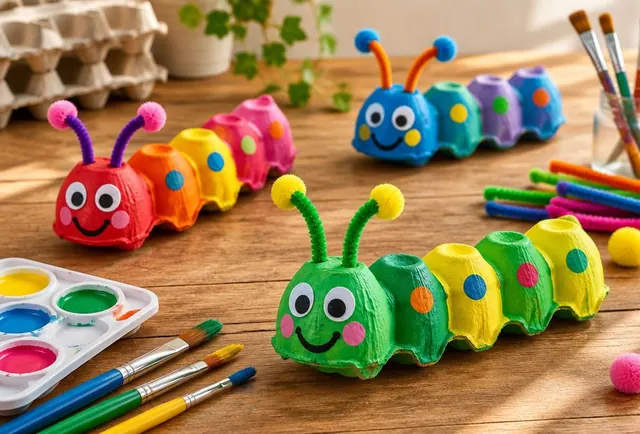
A cut-and-painted egg carton strip becomes a bendy, bobble-eyed caterpillar in one sitting.
painting
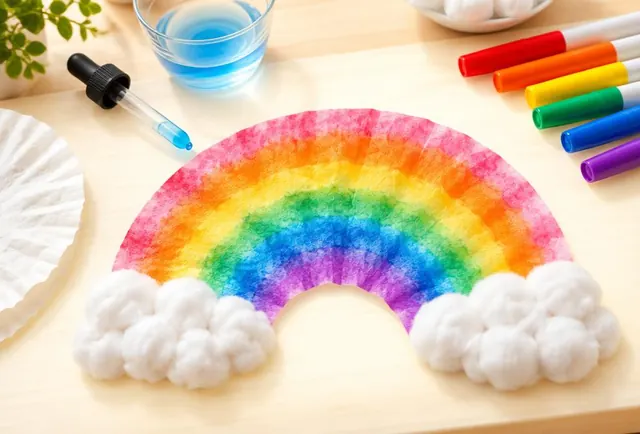
Marker colours bleed and blend across a wet coffee filter, then dry into a hanging paper rainbow.
painting
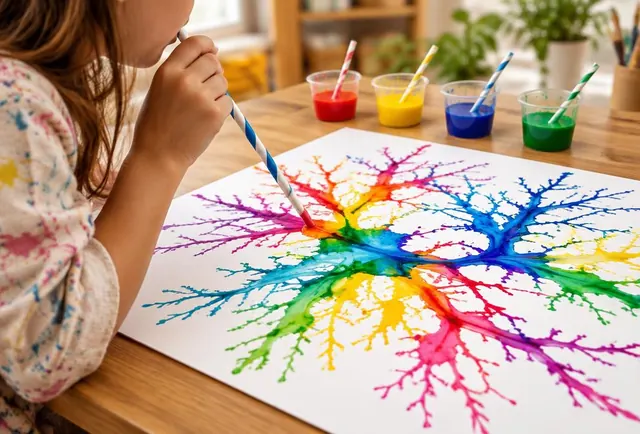
Blowing thinned paint across paper through a straw sends colour skittering into wild branching shapes.
Free download
Twenty printable activity cards for ages 2–8, sorted by time and mess level. One email, no spam, unsubscribe any time.
Washable tempera or ready-mixed poster paint labelled non-toxic and age-appropriate. Avoid acrylic entirely until around six.
Rinse cold immediately, then wash warm with a stain remover. Acrylic that has dried is permanent, which is why we avoid it.